Visibility tools for 3PLs who already have a WMS
Your WMS is doing its job. There’s still a layer it can’t show you.
Warehouse Bridge is three software tools and a hardware line for 3PLs who already run a WMS — Camelot today, plus other WMS on request. Photo evidence at the dock. A heatmap over your slotting. A scorecard your clients can log into. Plus the pick-to-light hardware to act on what the software tells you.

Built by operators
You can feel it before you can prove it.
Something in receiving is slow. A client is getting twitchy. The night shift is doing more put-aways than the day shift used to. None of it shows up in your WMS exception report — that report only shows what the WMS thinks is exceptional.
We surface what your WMS sees but doesn’t say: the dock door that runs ten minutes behind, the SKU that’s quietly moved from B-velocity to A-velocity, the client whose damage rate has crept past the SLA in the last six weeks.
57%
of picker time is walking. Re-slotting against your actual pick history typically reclaims 18–34% of that.
$50–150
per mis-pick by the time the chargeback, the re-pick, and the client conversation are over. At 97% accuracy a 100k-pick month is a six-figure year.
The data is there.
What you don’t have is a layer that makes it legible. That’s all we do.
Built by operators and engineers who’ve lived with WMSes from both sides.
Chuck spent twenty years in 3PL operations — VP at Port Logistics Group when Ryder bought them, founder of the NJCU Logistics Center, has taught at NYU Tandon. He’s the half of the company that has actually stood on a dock.
Steven has twenty years of software development behind him — B2B and B2C platforms, integrations, the bridge between what operators say and what engineers ship. He runs and consults to companies that live on WMSes every day, which is how he knows what platform vendors keep refusing to ship.
They started Warehouse Bridge because they kept hitting the same wall from opposite sides: the tools that worked were trapped inside platforms nobody wanted.
 Chuck Feldman · Operations
 Steven Sharp · Technology
The family
A family of four. Each one stands on its own.
Three software tools sold from three separate domains, plus a hardware line we ship from this one. The thinking: an operator should be able to fix what’s bleeding right now without buying a platform. DockSnap for the dock. Heatmap for the slotting. Scorecard for the renewal. Hardware for the aisle.
 DockSnap
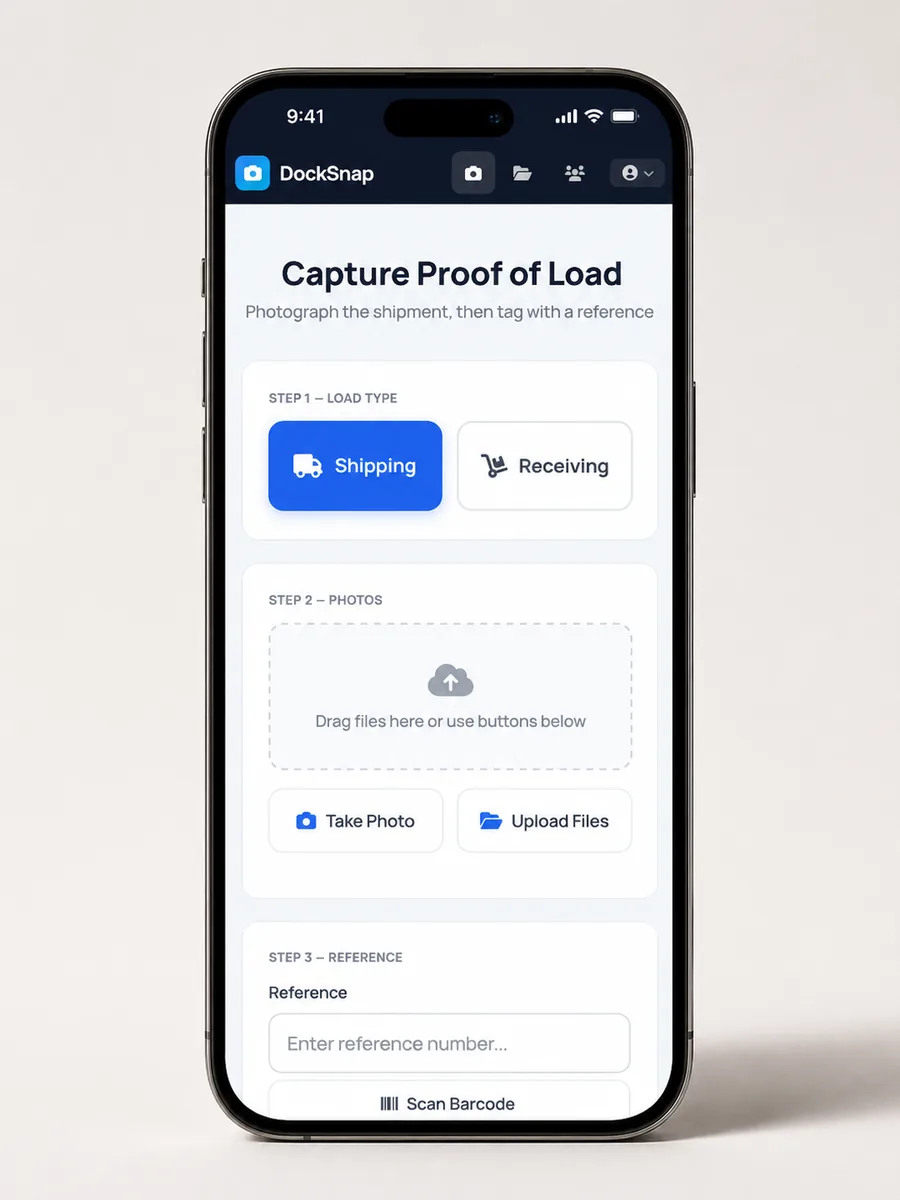
Dock photos that find themselves later.
- Capture on Android handhelds (incl. Zebra, Honeywell scanners) and iPhones your team already carries — no kiosk, no new device
- Auto-indexed by shipment ID, BOL, client, and dock door
- Offline at the dock, syncs on reconnect; searchable in three taps when a chargeback shows up
 Warehouse Heatmap
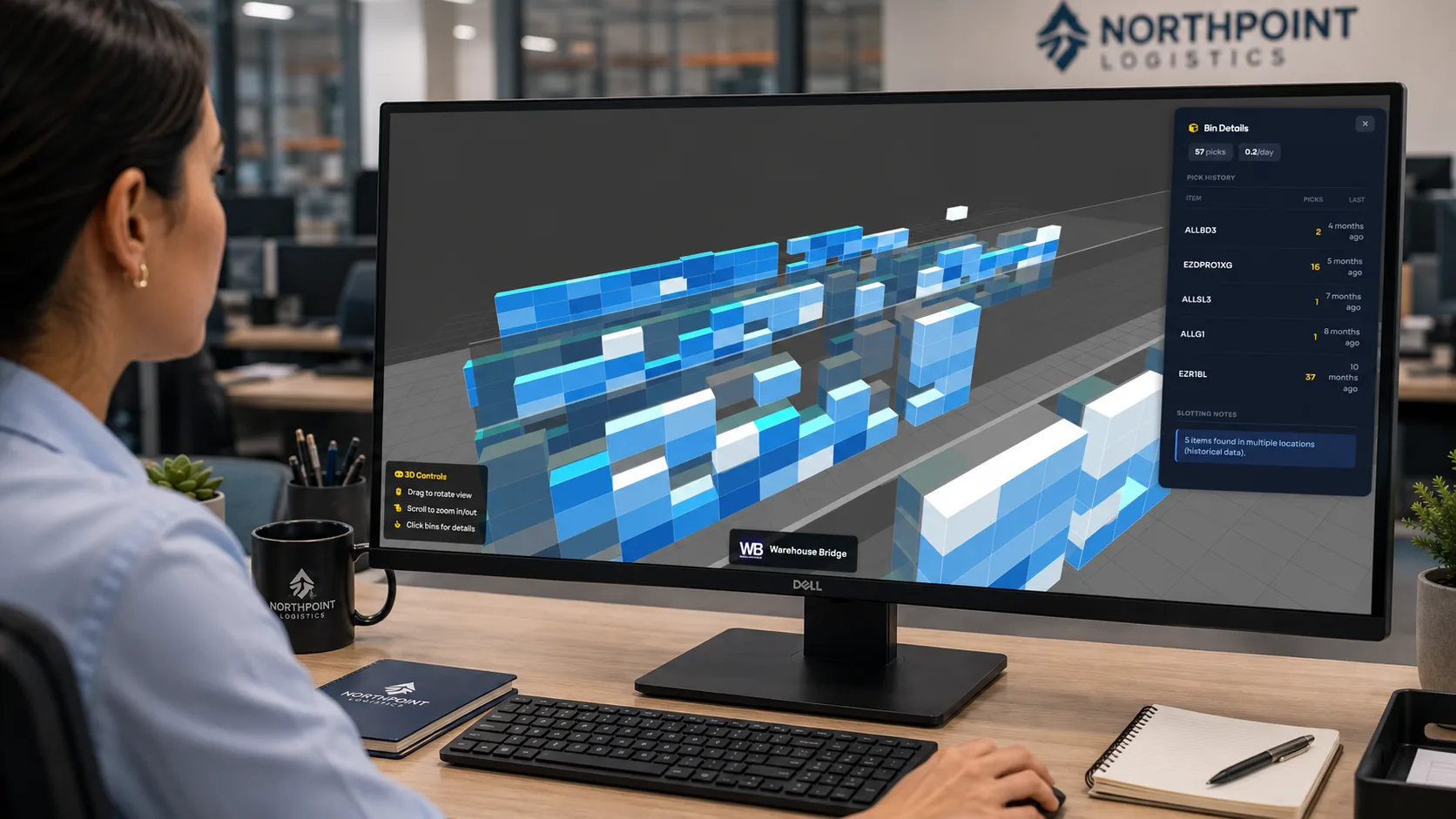
Your slotting, lit up by what actually picked.
- 2D and 3D heat-map of pick density by aisle, zone, SKU
- Camelot direct, or CSV upload from any other WMS
- Slotting moves ranked by estimated labour-hours saved per week
 Client Scorecard
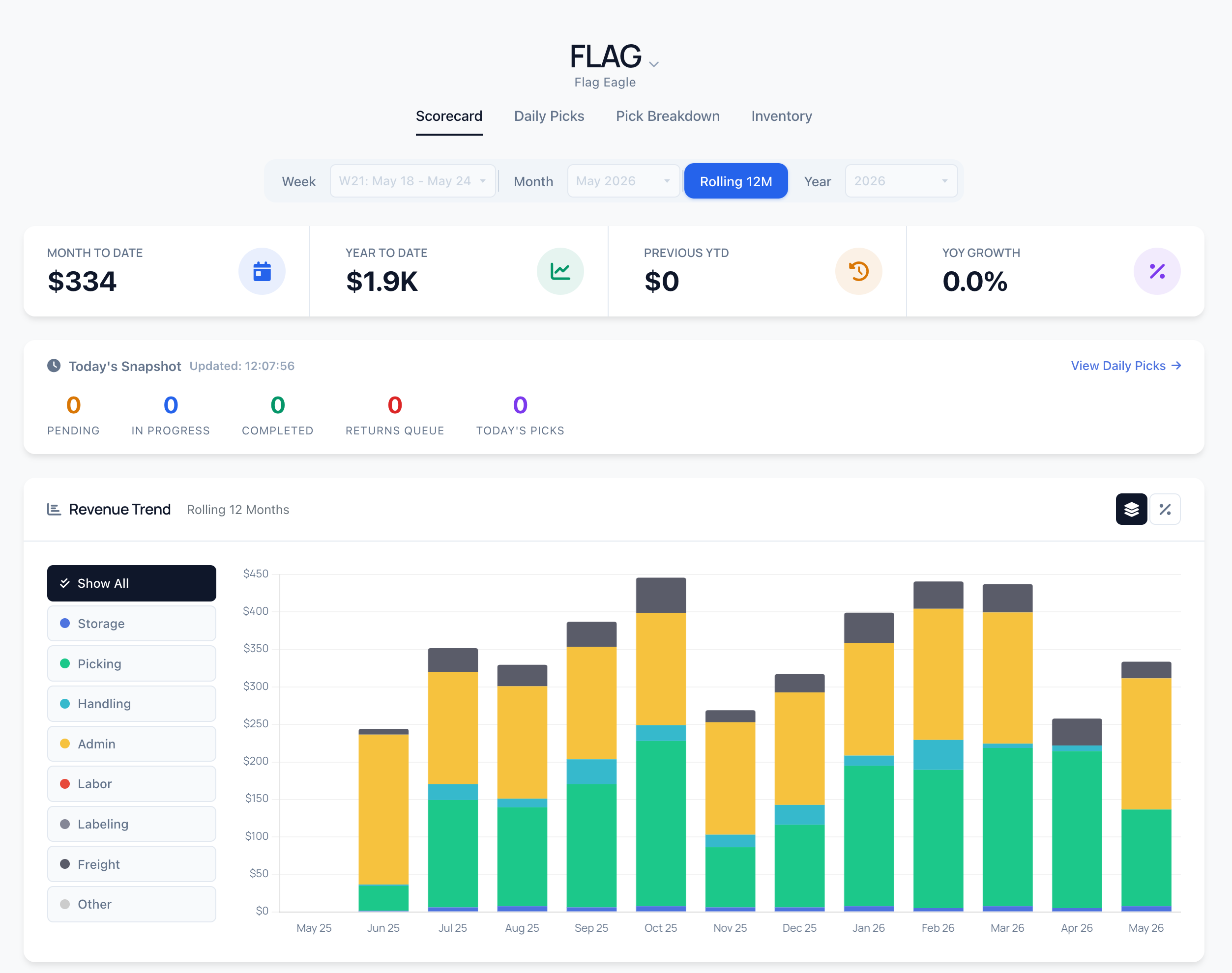
What they quoted, vs. what they actually shipped.
- Captures the activity profile a client promised at signing — units in, units out, storage, value-adds
- Tracks the real numbers month by month off your WMS feed
- One page per client, traffic-light flagged, ready for the renewal conversation
 Hardware
Pick-to-light. Put walls. Put-away.
- The Warehouse Bridge controller
- Banner gateway + industrial pick lights
- DIY install, a day per zone
The methodology
The 3PL Operating System.
We made this up. Between Chuck’s twenty years on warehouse floors and Steven’s twenty years of software development — much of it shipping into companies that live on WMSes — the same five steps kept showing up: See It, Map It, Score It, Light It, Oversubscribe. Each one has a named tool. Most operators enter at step one or step two and earn the next from the savings the last one created. You don’t have to do all five.
01 — See It
DockSnap
The photos your team already takes — in one searchable library.
A carton arrives crushed. A picker ships the wrong colour. A driver swears the pallet was fine when it left. Three weeks later the chargeback lands, and your defence is somebody’s word against somebody else’s memory.
DockSnap captures on Android handhelds (incl. Zebra, Honeywell scanners) and iPhones your team already carries — no kiosk, no new device, offline at the dock and synced on reconnect. Every photo is auto-indexed by shipment ID, BOL, client account, and dock door. When the call comes in, you find the proof in three taps. $500/mo + $10/user, no contract minimum.
Visit the DockSnap site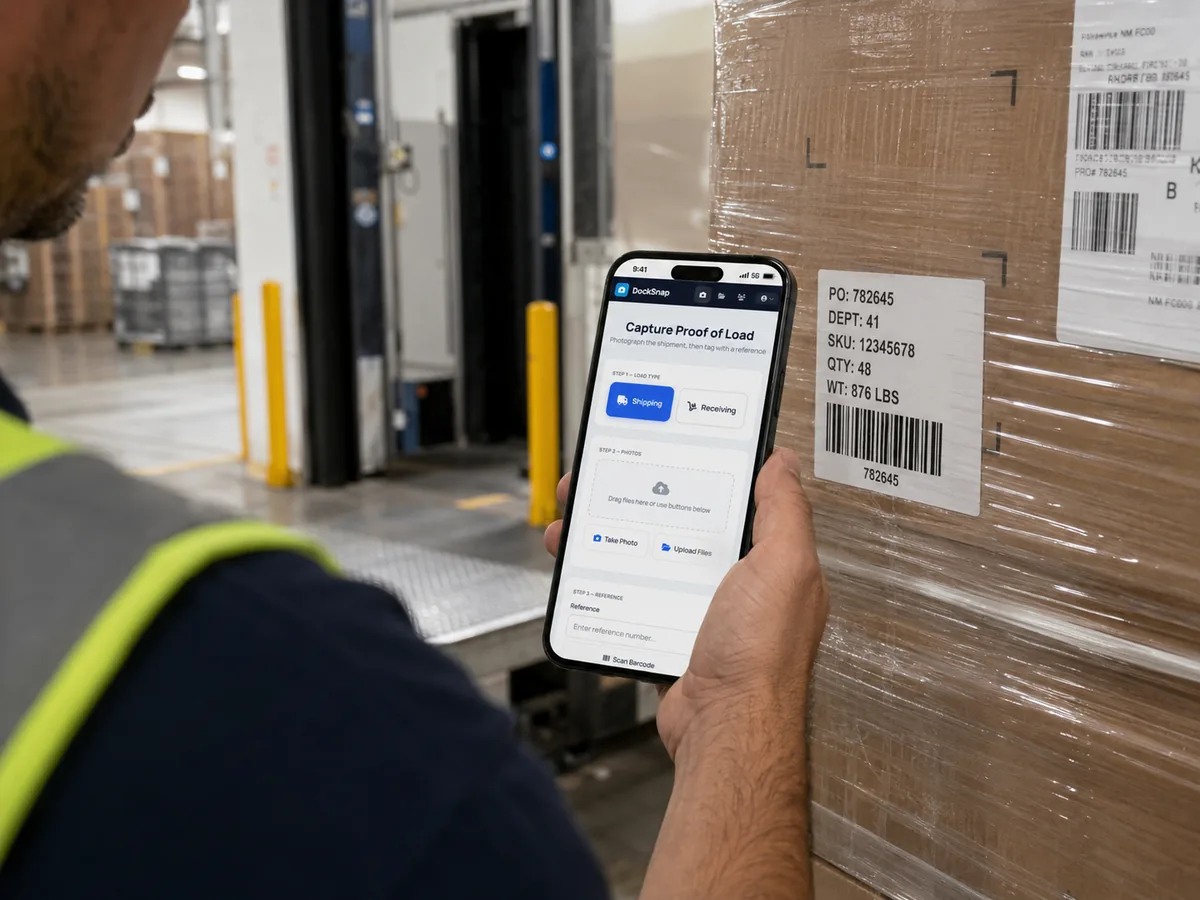
02 — Map It
Warehouse Heatmap
Your pick history, drawn over the floor plan.
You slotted aisle 4 in August. Since October the picker has been walking past three hot SKUs to grab the one she needs. The pick history says so. The slot tag doesn’t. 57% of picker time is walking; the first-pass re-slot typically gets 18–34% of it back.
Heatmap reads pick history from your Camelot directly, or from a CSV out of any other WMS. It renders an interactive 2D and 3D map of your facility — hot zones glow red, dead zones sit grey — and ranks every potential SKU move by estimated labour-hours saved per week. $99/mo for one location, $199 for up to five. Unlimited users.
Visit the Warehouse Heatmap site03 — Score It
Client Scorecard
You priced what they said. Scorecard tracks what they did.
Every 3PL signs in good faith. Then orders climb, picks change, storage stretches — and nobody has a document that compares the quote to reality. Saturday before the QBR the spreadsheet is half-built. Monday morning the client wants to know why pick accuracy dropped last week.
Scorecard captures the activity profile a client promised at signing — units in, units out, storage SKUs, value-adds, exception bands — then reads actuals from your WMS month by month. It outputs a one-page scorecard per client with traffic-light flags benchmarked to your own warehouse, a live portal each client can log into, and the margin-impact view that tells you which accounts have drifted into the red. Renewals start with proof, not feelings. $99/mo for one location, $199 for up to five.
Visit the Client Scorecard site
04 — Light It
Hardware
Pick-to-light, put walls, put-away. Banner builds the lights. We build the bridge.
The Warehouse Bridge controller ships pre-configured, talks to your WMS, and drives the Banner gateway in the aisle. The gateway lights up the industrial-grade pick lights at the pick face. Camelot today, plus other WMS on request — the controller sits in the middle. You install it yourself in a day per zone.
See the architecture05 — Oversubscribe
 Warehouse Bridge
Run more clients through the same building.
Visibility plus slotting plus scoring plus lighting together let you put more SKUs, more clients, more throughput through the same square footage. The compound effect of all four — that’s how the maths actually works.
Take the 60-second audit
Three ways in
Three ways in. Pick the one that fits this week.
The audit
You know something’s off. You don’t know what.
Eight questions, sixty seconds. We map your answers against the 3PL Operating System and give you the named tool that fits your weakest link. A one-page report you can keep.
Take the 60-second auditThe playbook
You’re not ready to act. You’re ready to read.
Three founding articles from Chuck and Steven on what they’ve actually seen on real warehouse floors. No email gate, no PDF download wall.
Read Field NotesThe demo
You’ve done the homework. You want to see the tool.
Pick the tool (DockSnap, Heatmap, Scorecard, Hardware), pick a slot, we walk it. Twenty minutes. We’ll bring real data.
Book a demo- Heatmap & Scorecard from $99/mo; DockSnap from $500/mo
- Sign up & go on the software
- DIY install on hardware, a day per zone
- No engineers on your floor
Frequently asked
The questions 3PL operators ask first.
Is Warehouse Bridge a WMS?
No. Warehouse Bridge does not replace your warehouse management system. It sits on top of one. Camelot is our shipping integration today; other WMS platforms via CSV/API on request, with native integrations on the roadmap.
What tools does Warehouse Bridge make?
Four products, each on its own domain. DockSnap — dock photo documentation. Warehouse Heatmap — slotting and pick-density analytics. Client Scorecard — per-client operational scorecards. And Hardware — pick-to-light, put walls, put-away on Banner Engineering components.
Can I buy just one Warehouse Bridge tool?
Yes. Each product is sold independently on its own domain with its own pricing. Monthly billing, no contract minimum. Most customers start with one tool and add others as the first one earns its place.
How is Warehouse Bridge different from a full WMS replacement?
WMS replacement ships in 9–18 months and costs $250,000–$2,000,000. Warehouse Bridge ships in 2–6 weeks per tool, priced in the hundreds to low thousands per month, with no operational disruption. We are a visibility layer, not a replacement.
What is the 3PL Operating System?
The five-step methodology we organise everything around: See It (DockSnap) → Map It (Heatmap) → Score It (Client Scorecard) → Light It (Hardware) → Oversubscribe. Each step has a named tool. Most operators enter at See It or Map It and add the rest over 6–12 months. Read the methodology.
Who founded Warehouse Bridge?
Chuck Feldman — Operations. 20+ years inside 3PLs, former VP at Port Logistics Group / Ryder, founder of the NJCU Logistics Center, M.S. NYU Tandon.
Steven Sharp — Technology. 20 years of software development across B2B and B2C; runs and consults to companies that use WMSes every day. Read the full story.